

Two coats are common for driveway paint, and careful driveway paint preparation helps the finish apply evenly. First assess the concrete’s texture, condition and porosity to decide how to prepare it.
A durable finish depends on more than the paint itself. Clean the concrete thoroughly and let it dry before coating. The surface condition will guide how much preparation the driveway needs.
This guide explains how to check concrete, prepare the surface and choose the number of coats. You’ll also learn what affects durability and what annual maintenance may involve.
Key Takeaways
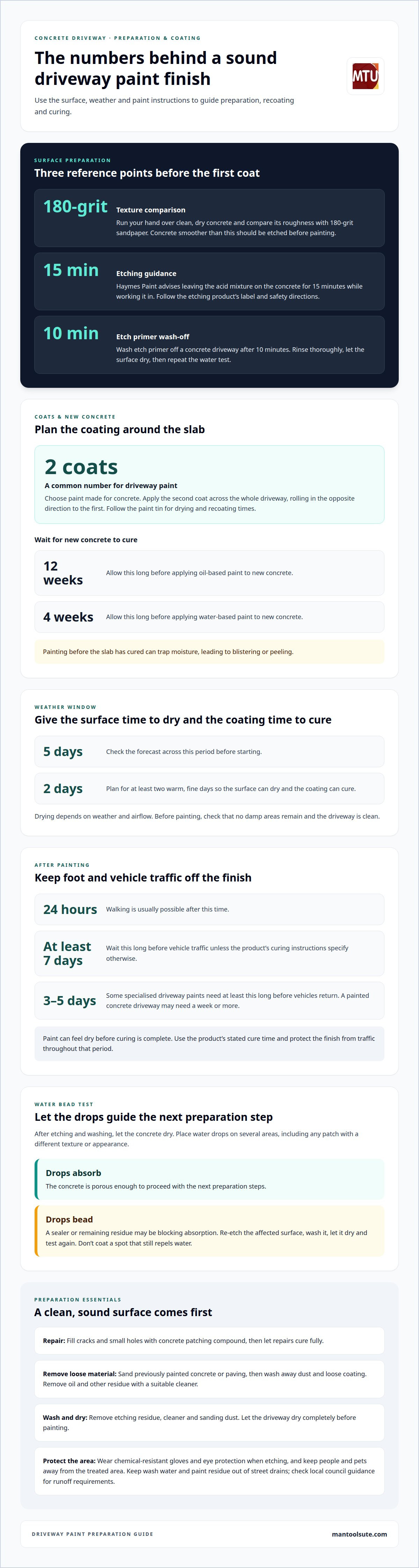
- Compare the concrete’s roughness with 180-grit sandpaper to judge whether etching is needed before painting.
- Use water drops to assess porosity: absorption and beading point to different preparation needs.
- Plan painting around a suitable spell of warm, fine weather so the surface can dry and the coating can cure.
- Set a simple annual maintenance routine and watch for wear, as traffic and coating type affect when touch-ups are needed.
Assessing concrete texture before painting
Fill cracks and small holes with concrete patching compound, then let the repairs cure fully before painting. This helps prevent paint from bridging unstable edges or sinking into open damage.
- Check the concrete texture. Run your hand over a clean, dry area and compare its roughness with 180-grit sandpaper. According to Haymes Paint, concrete smoother than this should be etched before painting. A suitably rough surface gives the coating more texture to grip. Also inspect for flaking paint, loose material, deep stains and crumbling edges. If the driveway has extensive cracking or structural wear, painting may not address the underlying problem.
- Etch smooth, bare concrete. Use a concrete etching product according to its label, and work it across the surface with a stiff broom. Haymes Paint advises leaving the acid mixture on the concrete for 15 minutes while working it in. Wear chemical-resistant gloves and eye protection, and follow the product’s handling and protective-equipment directions. Keep people and pets away from the treated area.
- Prepare painted or sealed areas. Sand previously painted concrete or paving with a pole sander, then wash away dust and loose coating. If water beads on the surface, a sealer may be present and may need stripping before painting. Remove oil stains and other residue with a suitable cleaner, following its label. Don’t paint over peeling edges or a glossy sealed surface, as the coating may not bond evenly.
- Wash and dry thoroughly. Remove etching residue, cleaner and sanding dust with a thorough wash, then let the driveway dry completely before painting. In Adelaide, drying time depends on weather and airflow, so make sure no damp areas remain. Check the surface for dirt or moisture before applying concrete paint. Proper cleaning also prevents grit and oil from becoming trapped beneath the exterior coating, where they can interfere with adhesion and sealing.
How many coats of driveway paint are typical?
Two coats are common for driveway paint. Choose a product made for concrete and follow its label for drying and recoating times.
For new concrete, allow 12 weeks before oil-based paint or 4 weeks before water-based paint. Painting before the slab has cured can trap moisture, leading to blistering or peeling.
Check the five-day forecast and plan for at least two warm, fine days. Keep wash water and paint residue from flowing into street drains, and check local council guidance for runoff requirements.
- Apply primer if the surface needs it. A specialised concrete primer helps seal porous areas and reduces uneven absorption. Let it dry as directed before applying the top coat. This supports adhesion across changes in texture and helps the chosen colour look more consistent.
- Spread the first coat thinly and evenly. Brush paint along edges and details, then roll the larger area in manageable sections. Avoid heavy pressure, which can leave ridges or push paint into low spots. A thin coat dries more evenly than a thick layer.
- Allow the first coat to cure. Allow the first coat to dry fully before applying the next coat, following the paint tin’s directions. Drying can take longer in cool or humid conditions, so follow the paint tin if it specifies a longer interval. The surface should be dry before recoating.
- Apply the second coat across the whole driveway. Roll in the opposite direction to the first coat to help even out coverage. Keep the second coat unthinned, and avoid leaving thick overlaps at joins. More than two coats is generally wasteful unless the product instructions call for them.
- Keep people and vehicles off the finish. Walking is usually possible after 24 hours, but wait at least 7 days before vehicle traffic. Paint may feel dry before curing is complete, and tyre pressure can mark or damage a coating that is still setting.
- Use the product’s cure time as your guide. Some specialised driveway paints need at least 3-5 days before vehicles return, while a painted concrete driveway may need a week or more. Protect the finish from traffic throughout the stated curing period.
Checking surface porosity with a water bead test
After etching and washing, let the concrete dry, then place water drops on several areas. If the drops absorb, the surface may be ready for painting preparation; if they bead, it may need further attention.
- Test more than one spot. Check a central area, an edge and any section with a different texture or appearance. If water absorbs into the concrete, it is porous enough to proceed with the next preparation steps. If it beads on top, a sealer or remaining residue may be blocking absorption.
- Repeat etching if water beads. Re-etch the affected surface, then wash it and allow it to dry before testing again. Don’t apply a coating over a spot that still repels water. Different patches can absorb at different rates, so test the full project area rather than relying on one small section.
- Deep-clean before the final test. Remove dust, loose coating, oil stains and cleaner residue so they don’t interfere with the result or paint coverage. For previously painted concrete, sand loose or glossy areas with a pole sander, then wash away the debris. Let the cleaned surface dry before placing fresh drops.
- Choose compatible primer and paint. For Australian concrete, select driveway paint made for concrete and with UV resistance. A specialised concrete primer helps seal porous areas and reduces uneven top-coat absorption. Preparation should suit the concrete’s texture and the coating system being used.
- Follow the etch-primer instructions. Etch primer should be washed off a concrete driveway after 10 minutes. Rinse thoroughly, allow the surface to dry, and repeat the water test. If drops absorb rather than bead, apply the compatible primer or coating as directed. Use a roller suited to the concrete’s texture, since rough sections can affect coverage.
Expected paint durability and annual maintenance
- Set a realistic lifespan for the coating. A properly applied driveway coating can last at least 5 years in normal climates. A professionally applied, high-quality two-pack epoxy or polyurethane coating can last 5-10 years. A standard single-pack acrylic paint may show wear after 2-3 years. These are useful guides, not a promise for every driveway.
- Match expectations to traffic and exposure. Frequent turning, parking and heavy vehicle use put more pressure on the finish than occasional use. Sun, rain and surface condition also affect durability. A clear sealer top coat can help a painted driveway resist oil stains, tyre marks and UV damage. It won’t prevent all wear, so clean grease and spills promptly.
- Inspect the surface every year. Look for peeling edges, worn wheel paths, cracks and stains that could signal coating damage. Pay particular attention to the driveway entrance and the areas where vehicles regularly stop or turn. Early checks help you identify local wear before it spreads across a larger section.
- Prepare worn spots before touch-ups. Each year, scrape away loose material, sand the area to be painted, clean it and let it dry before applying touch-up paint. Remove grease and dirt thoroughly so the new coating can adhere. Apply compatible paint to the prepared section, following its product directions.
- Plan for recurring repairs. Painted sections may need touch-ups or recoating every 2-3 years, depending on traffic. If only wheel paths have worn, address those areas rather than assuming the whole driveway needs a fresh finish. For widespread peeling or damage, assess the surface and coating system before planning another application.
- Keep maintenance practical. Record the year you painted and note where wear appears during each annual inspection. That simple record helps you compare changes over time and plan the next repair. For help with a driveway coating and its upkeep, discuss your driveway painting project.
Mantoolsute Painting Service: Interior House Painting
Mantoolsute Painting Service provides Concrete & Driveway Painting for homeowners planning to refresh a concrete driveway. If the surface has worn patches, old paint or areas that need careful preparation, professional painting can help bring the project together. The texture, porosity and condition of the concrete all affect preparation and coating choice, so it helps to consider these before work begins. A heavily damaged driveway may need more than a new painted finish. For a driveway that’s suitable for painting, Mantoolsute Painting Service can help with the painting work as the next step. If you’re planning a concrete driveway project, contact Mantoolsute Painting Service to discuss it.
Plan the next step for your driveway
A driveway coating contributes to the home’s overall appearance, so consider how its colour and condition work with the exterior and outdoor areas. Careful driveway paint preparation also helps you decide whether to do the work yourself or have the painting handled for you. Mantoolsute Painting Service also provides Interior House Painting, Exterior House Painting and Timber & Decking, alongside concrete and driveway painting.
Before planning the work, consider how you use the driveway, the look you want and the upkeep you’re comfortable with. These priorities help shape a practical approach, rather than treating the coating as a purely cosmetic change. Start with a clear idea of what matters most for the space.
Contact Mantoolsute Painting Service to discuss your driveway painting project and take the next step with confidence.
Frequently Asked Questions
How do you prepare a concrete driveway for painting in Australia?
Clear vehicles, pot plants and loose items from the work area. Check that existing paint is firmly attached and identify repairs before selecting a compatible concrete coating. Pay attention to edges, joints and areas where water collects, as dirt can build up there and the concrete may stay damp after washing. Let the surface dry before coating.
How long does driveway paint take to dry and cure before parking on it?
Allow at least 7 days before driving or parking on a freshly painted driveway. A coating can feel dry before it has fully cured, so touch-dry doesn’t mean it’s ready for tyres. Check the paint manufacturer’s instructions for the particular product and conditions. Cool or humid weather can slow curing, and early vehicle pressure may leave marks or damage the finish.
What are the safety risks and precautions when pressure washing or etching a driveway?
Pressure washing can send water and debris back towards the operator, while acid etching can splash onto skin or eyes. Wear eye protection and suitable gloves, follow the washer and etching product instructions, and keep people and pets away from the work area. Use cleaning products as directed, and manage wash water carefully to prevent cleaner, paint flakes or etching residue spreading into unwanted areas.
Which primer and driveway paint are best for Australian concrete?
Choose a concrete driveway paint with UV resistance and use a compatible concrete primer where needed to seal porous areas and reduce uneven absorption.
Are there Australian council or environmental rules for driveway cleaning runoff?
Keep wash water and paint residue out of street drains, and follow local council guidance on runoff.


