

Low sheen is often the best paint finish for walls in Australian homes because it balances easy cleaning with a softer look that can disguise minor imperfections. Matt can suit quieter, dry rooms, but it marks more easily than higher-sheen paint. In a bathroom, choose dedicated moisture-resistant paint in a low-sheen or semi-gloss finish.
Matt may seem like the simplest choice because it softens glare and makes uneven walls less noticeable. That can work well, but traffic, cleaning needs and moisture all affect how easy a finish is to live with.
This guide compares matt, satin and gloss, explains where each works best, and clarifies how satin differs from the low-sheen labels commonly used on Australian wall paints. You’ll also learn what to consider for bathroom walls and which finish mistakes can leave paint looking uneven.
Key Takeaways
- Choose a finish with both light reflection and wall condition in mind, as higher sheen can draw attention to surface flaws.
- For a bathroom, consider a moisture-resistant paint in low sheen or semi-gloss rather than a standard matt finish.
- Australian paint labels often use “low sheen” for a finish similar to satin or eggshell.
- Match the finish to how the room is used, and avoid high gloss on uneven walls if you want to keep bumps less noticeable.
Are matt paints easy to live with?
Matt can suit quiet, dry rooms, but it marks more easily than higher-sheen paint. For everyday interior walls, the best paint finish for walls depends on the light, surface condition and cleaning needs.
Sheen, light and wall imperfections
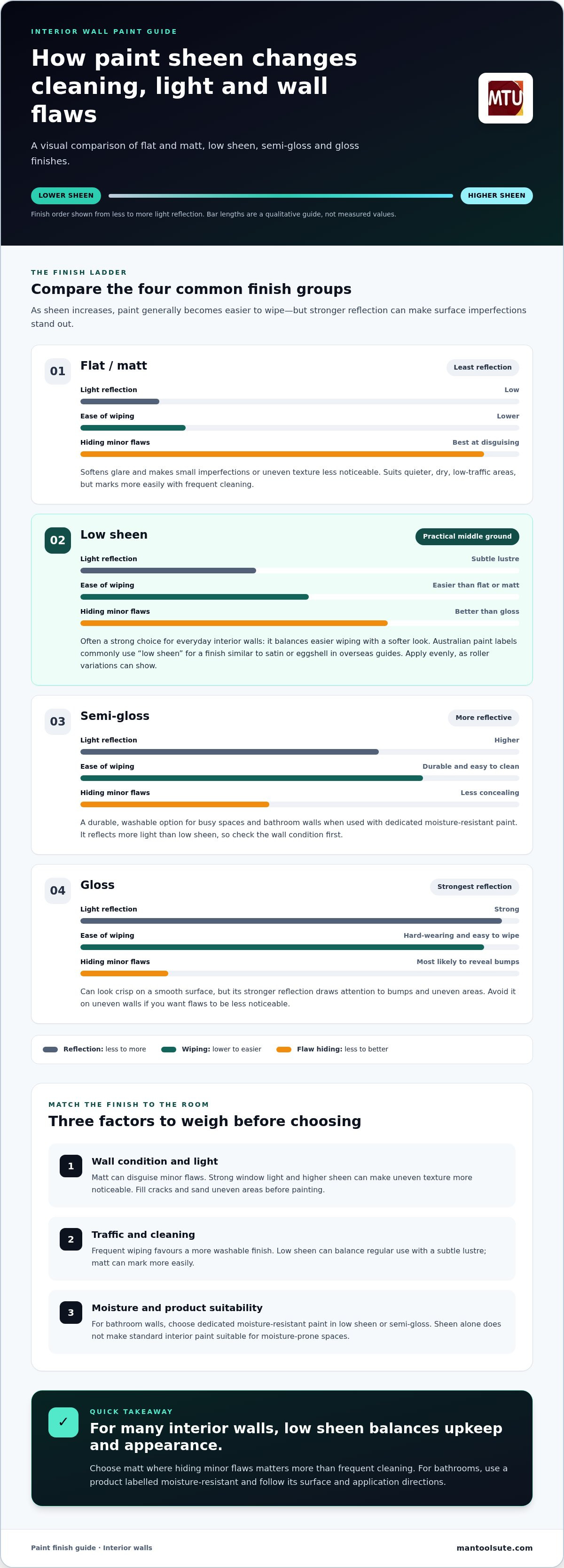
Sheen describes how much light a dried paint surface reflects. Matt absorbs more light, softening glare and helping hide imperfections. Gloss reflects more light, which can make colours appear brighter and reveal bumps. On older plasterboard or rendered walls, matt can make uneven texture less noticeable. Consider the wall condition, especially where strong window light falls across the surface. Flat or matt generally hides minor flaws best.
On plasterboard, rendered and older walls, assess the surface before choosing a finish. Matt can disguise small imperfections, but fill cracks and sand uneven areas before painting.
Washability across paint sheens
Washability generally improves as sheen increases. Matt can mark with frequent cleaning, while low sheen is easier to wipe and hides imperfections better than gloss. That balance can work well in a busy living area. Satin or low-sheen paint can show roller variations, so apply it evenly. The best paint finish for walls also depends on how often the room needs cleaning.
Paint cost depends on wall area, preparation and product choice; a quote request determines the project price. The required coats depend on the surface and product directions, not sheen alone.
Comparing flat, matt and low-sheen finishes
Flat and matt reflect little light and suit low-traffic areas. Low sheen has a subtle lustre and offers greater stain resistance. Australian paint ranges commonly use “low sheen” for a finish similar to satin or eggshell in overseas guides. Semi-gloss reflects more light and is durable and easy to clean. For most interior walls, low sheen balances upkeep and appearance. Check the label for surface suitability and application directions.
Australian paint labels identify the product’s intended surface and use. Follow the preparation and application directions rather than choosing by sheen name alone.
Should I use semi-gloss or gloss in a bathroom?
For bathroom walls, choose dedicated moisture-resistant paint in low sheen or semi-gloss, rather than standard interior wall paint. The finish needs to handle humidity and regular cleaning without making every wall flaw stand out.
Finishes for moisture-prone spaces
A finish for a moisture-prone room needs to cope with humidity and repeated wiping. This matters in bathrooms, where water vapour and cleaning put more demands on painted walls. Semi-gloss is durable and easy to clean, making it practical for busy spaces. Low sheen offers a softer appearance and less reflection while remaining easier to clean than flat or matt paint. In a hallway, low sheen can balance regular foot traffic with a subtle lustre. Gloss is hard-wearing and easy to wipe, but its stronger reflection can highlight imperfections.
Moisture resistance in bathroom paint
Bathroom paint is formulated for moisture-prone conditions, unlike standard interior wall paint. Choosing a sheen alone doesn’t make ordinary paint suitable for bathroom walls. Look for dedicated bathroom paint labelled moisture-resistant, and consider a low-sheen or semi-gloss finish. Satin or semi-gloss paint labelled mould-resistant is another option. Flat paint may be less suitable for bathroom walls, so consider a finish labelled for moisture-prone areas. Follow the product label for intended use and application instructions.
Semi-gloss isn’t automatically better than gloss. It gives a washable, durable surface with less reflection, while low sheen offers a softer look. Wall condition matters too: gloss can draw attention to bumps, making it less suitable for uneven bathroom walls. Low sheen offers a practical middle ground for a smoother appearance. Consider how often the walls need cleaning and whether a brighter, more reflective finish suits the room.
If you’re planning to refresh bathroom walls, interior house painting can help bring the chosen finish together with careful preparation and application.
What does paint finish actually mean?
Paint finish describes the appearance and light reflection of dried interior paint, from flat to gloss. Flat and matt reflect little light, while higher-sheen surfaces reflect more. This affects how a wall or ceiling looks in daylight and under lamps. For example, a flat ceiling finish can soften glare above a bright kitchen, while a reflective finish may draw attention to uneven areas.
Flat and matt finishes suit spaces where hiding imperfections matters more than frequent cleaning. Their low reflection can make minor marks and uneven patches less noticeable, which helps on older walls or ceilings. Matt can work in a quiet bedroom with little traffic. However, it marks more easily than higher-sheen paint, making it less practical for busy kitchens or hallways that need regular wiping.
Flat ceiling paint is designed for ceilings, where frequent cleaning and hard-wearing durability are less important. Its low reflection reduces glare across a broad surface, and its flat appearance can make small ceiling flaws less prominent. A matt finish may also suit a ceiling, but a ceiling-specific product is designed for that surface. Check the label before using interior paint overhead or on walls.
Let the room’s purpose guide your choice. Flat or matt can suit a low-traffic study, while a kitchen wall may need a more washable finish. A ceiling-specific flat product is a poor match for a wall that needs frequent cleaning. In a room with large windows, low reflection can soften strong light. Consider the surface, expected traffic and cleaning needs together, then choose a product labelled for that use.
Common paint-finish mistakes
A common mistake is choosing sheen by appearance alone. Gloss can look crisp on a smooth wall, but reflects light strongly and highlights bumps. On an uneven living-room wall, those flaws may become more noticeable after painting. Check the surface texture first, then choose a finish that suits both its condition and the room.
Another mismatch is using flat finishes where moisture or regular traffic is part of daily life. Matt marks more easily, so it may not suit a busy hallway or family living room that needs frequent cleaning. In bedrooms with less traffic, flat or matt can be more forgiving. Match the finish to how the space is used, not just its colour.
Don’t assume higher sheen will solve every cleaning problem. Gloss is durable and easy to wipe, but its reflective surface can make wall imperfections stand out. It can also be difficult to apply evenly, making roller marks more visible. If a wall has bumps, a lower-sheen finish can make them less prominent, though preparation still matters.
Skipping surface preparation is another avoidable mistake. Paint adheres poorly to walls that are dirty, damp or contaminated. Before painting, make sure the surface is clean and dry. Fill cracks and imperfections, then sand them smooth. Even matt won’t hide poor preparation, though it may soften the appearance of minor flaws.
Finally, don’t rely on a finish name alone. Australian ranges may label comparable wall sheens differently, so read the product directions and intended uses. Test the chosen colour on the actual surface before committing. View it under the room’s daylight and lighting, since gloss reflects more light and can alter the colour’s appearance. For a separate outdoor hard surface, discuss concrete and driveway painting as part of your property project.
Mantoolsute Painting Service: Interior House Painting
Mantoolsute Painting Service provides interior house painting for homeowners ready to put finish choices into practice. When repainting a room, choose a finish to suit its use, light and wall condition, not colour alone. Low sheen may work well on everyday interior walls, while a bathroom needs dedicated moisture-resistant paint. Matching the product to each surface helps create a considered result throughout the home.
Interior painting can bring walls and ceilings together, with finishes chosen for their different roles. If uneven walls or frequent cleaning make the decision difficult, plan the finish around those priorities as part of your painting project.
Contact Mantoolsute Painting Service to discuss your interior painting project, or visit mantoolsute.com.
Make your finish choice part of the bigger plan
Before choosing paint, consider how each room connects with the rest of your home. A finish that suits one wall may feel out of place beside adjoining spaces, so think about the overall look as you plan colours and surfaces. The best paint finish for walls supports the way you live and sits comfortably with your home’s broader palette.
Mantoolsute Painting Service offers interior and exterior house painting, as well as timber and decking work. If you’re planning more than one area, discuss how the painted surfaces can work together as a single project. A clear plan helps you make confident choices before work begins.
For help planning your next painting project, contact Mantoolsute Painting Service. A considered finish can help your home feel more complete.
Frequently Asked Questions
How do matt and low sheen compare for normal walls?
For everyday dry walls, low sheen is a sensible choice if you want a finish that handles routine upkeep. Matt suits a room where a softer, less reflective look is the priority. Compare a dining-area wall that may need wiping with a quiet spare room. How you use each room can guide your choice.
Need Help Choosing the Right Finish?
Yes. Mantoolsute Painting Service can help plan an interior painting project around the rooms and surfaces you want painted. Homeowners in Seacliff, Brighton, Hove, Marion, Sturt, Dover Gardens, Marino, Hallett Cove, Sheidow Park, Seaview Downs, Kingston Park, Seacombe Gardens, Glenelg, Somerton Park, Glengowrie, Morphettville and Warradale can discuss their painting needs with the team. Consider which rooms you’re updating and how you use them.
Satin versus gloss: what’s the difference?
Satin has a subtler lustre than gloss, while gloss looks brighter and more reflective. This can affect how a coloured wall appears beside a window or under ceiling lights. Before choosing, view a sample in the room at different times of day. The same paint colour can look different as the amount and angle of light change.
Satin vs matt: which is better?
Neither finish suits every room. Satin can work on a wall that gets regular contact, such as near a light switch or dining area, while matt can suit a quieter room where you prefer a softer appearance. Consider how the wall is used as well as how it looks. The right choice fits both.
What is a sheen level?
Sheen describes how reflective paint looks once dry, from flat or matt through to gloss. Rather than relying on a name alone, look at a finish sample beside the wall and under the room’s usual lighting. This helps you judge its appearance in context, especially in a space with strong natural light.
Which wall paint finish hides imperfections best?
Flat or matt paint is generally better for making small surface flaws less noticeable. Before choosing a finish, look across the wall from the side, where angled light can reveal bumps, joins and uneven texture. If the wall is already smooth, you have more flexibility to choose based on the room’s use and the appearance you prefer.


